Soft Matter and Physics of Biopolymers
Universidad Autónoma de Madrid & IFIMAC (Spain)
Soft Matter and Physics of Biopolymers
Welcome to our webpage! We are interested in the theoretical and computational study of soft matter systems, with a special interest in biopolymers.
Go to the "People" tab to meet us!
You can find out what we are working on
by clicking on the "Research" tab
or peeking at the publication list.
News
Chiara defended successfully her MSc thesis! Congratulations!!
Salvatore gives an invited talk at AMYC-Biomed 2026 Conference in Milan (Italy)
Big welcome to Lucía, who will pursue her MSc project in our group!
Jorge and Yago deliver two talks at the "Trends in soft condensed matter" symposium within the XL Biennal of the Spanish Royal Physics Society
Congratulations to Antonio, Álvaro and Alberto for defending their MSc thesis!
Welcome to Chiara Tramarin from University of Padua, who will pursue her MSc thesis in our group!
Salvatore delivers a talk on lipid mesophases at the 3rd Spanish Soft Matter 1 1/2 Day
A big welcome to MSc students Antonio and Álvaro!
Congratulations to Alberto, who is the recipient of an IFIMAC grant for his MSc thesis!
What a month! After a great defense, Eva has now earned the title of PhD! Congratulations Eva!
An important milestone for the group: Juan brilliantly defended his PhD viva and became the first PhD to graduate from the group! Congratulations Juan!
Welcome Alberto, who will pursue his MSc project in the group!
Yago rejoins our group as a PhD student! Welcome back!
Contact & Links




Research Interests
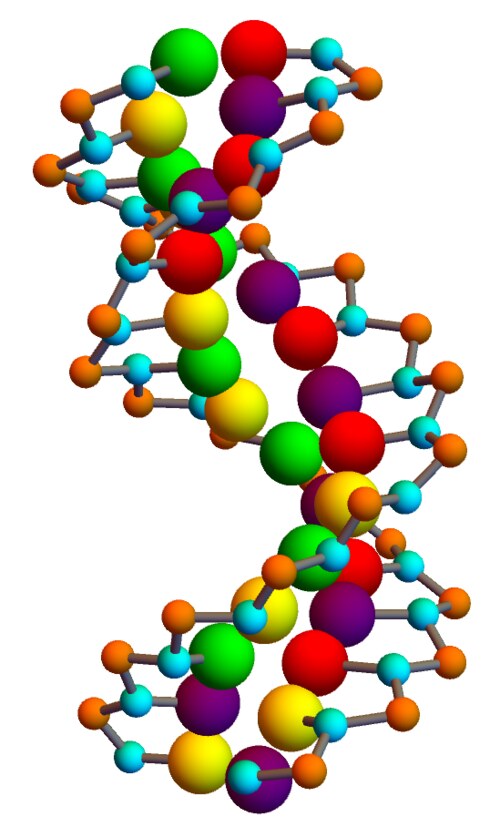
DNA carries all the information needed for survival and reproduction of a cell. This information
is physically encoded by forming chains of nucleotides (A,C,G,T) in a specific order, thus obtaining
a four-letters encoding string. The well-known double helix in which these chains are
geometrically organized is far from being homogeneous. Experimental evidence shows indeed
that the actual geometry locally deviates from an ideal double-helix, according to the sequence
of the fragment under inspection. Thus, the composition of the DNA molecule is also reflected
into its specific conformational features, which in turn evidence the presence of sequence-
dependent elastic properties. These features play a key role in promoting or inhibiting the
interaction with the protein machinery of the cell, thus ultimately affecting the epigenetic
regulation of DNA and the emergence of diseases should such regulation fail.
More recently, the role of RNA has also been shown to be more widespread than envisaged previously. For instance,
it has been demonstrated that long non-coding RNAs have key regulatory effects in the cell,
yet their molecular description is far from being clear. This is due to the single-stranded nature of the RNA
typically found in the cell and to the presence of many weak interactions, which confer to this molecule a rich
conformational heterogeneity. Nonetheless, functional elements can be shared even by lncRNAs with
very different sequences: in a collaboration combining simulations with experiments,
we have identified a structural element
common to two sequence-divergent lncRNAs, which mediates their binding to the hnRNP K protein
in the cellular response to DNA damage.
Our current research line is focused on investigating the sequence-dependent molecular properties of DNA and RNA,
and their role in biocellular processes. For instance, via atomistic simulations
we have uncovered the change in
the elasticity response of double-stranded nucleic acids, finding that dsDNA becomes stiffer while dsRNA becomes
softer upon pulling. We have also shown that the stretching elasticity of dsDNA
is a universal function
of its local minimum-energy conformation.
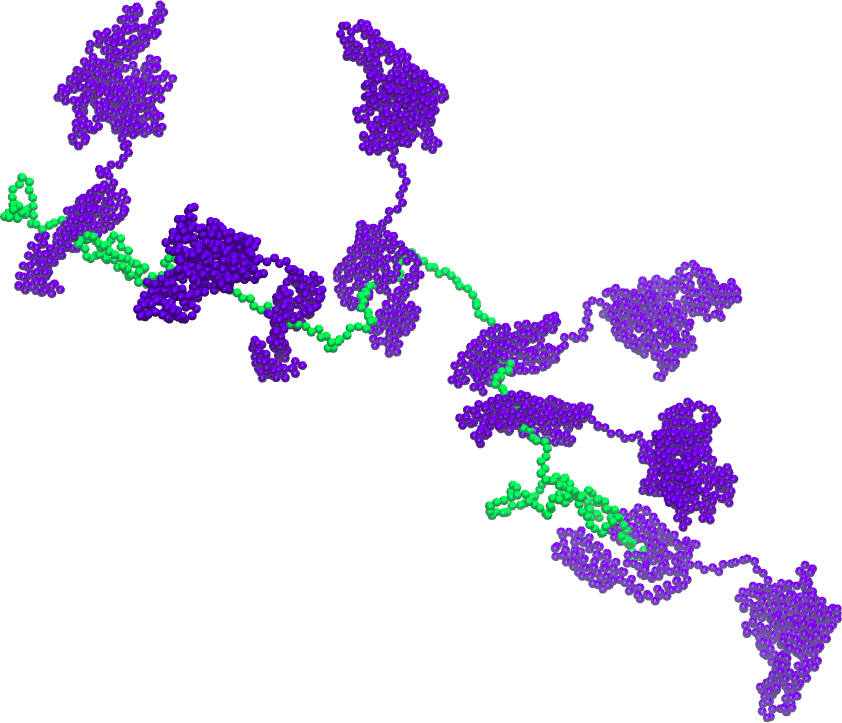
We also look at larger molecules via coarse-grained approaches. For instance, we have developed
the coarse-grained model MADna,
which provides an accurate sequence-dependent description of the elasticity and conformation of
double-stranded DNA based on an extensive dataset of all-atom simulations. At even larger scales,
we have employed coars(er)-grained descriptions of topologically-bound membranes, inspired by the
kinetoplasts observed in certain parasites, and
observed the emergence of
spontaneous Gaussian curvature induced by the linking chirality.

Publications List
-
Scaling the Dynamics of Coiled Coils
P. Saha, Y. Saravanan, A. Marchesi, C. Valotteau, P. Revy, T. T. Paull, S. Assenza, K.-P. Hopfner, M. Modesti and F. Rico
bioRxiv preprint (2026) -
Conserved architecture of a functional lncRNA-protein interaction in the DNA damage response pathway
S. Assenza, C. Blanco, C. Favard, J. Carnesecchi, M. Marcia and I. Chillón
bioRxiv preprint (2025) -
Dextran-Mediated Control of Ice Crystallization in Polyphenol-Protein Fibril Networks for Freeze–Thawing-Stable Hydrogels with Anti-Inflammatory Activity
M. Sun, H. Zhao, S. Bai, S. Cheng, S. Assenza and B. Hu
Biomacromolecules 27, 6044 (2026) -
Resolving liquid-to-glass transitions of water under soft nanoconfinement
P. Züblin, E. Zunzunegui-Bru* , L. Salvati Manni, A. Klapproth, R. Mole, N. Rao Yepuri, S. Khaled, G. P. Laurent, T. Azaïs, S. R. Alfarano, J.-B. Brubach, S. Assenza, F. Sciortino and R. Mezzenga
Nature Communications 17, 6224 (2026) ( *Co-first Author ) -
Hydrophilicity and topology interplay determines positioning of guest molecules in lipid cubic phases
E. Zunzunegui-Bru, S. Assenza* and R. Mezzenga
J. Coll. Interf. Sci. 702, 138802 (2026) ( *Co-corresponding Author ) -
Lipidic drug delivery systems are responsive to the human microbiome
J. Caukwell, S. Assenza, K. A. Hassan, B. A. Neilan, A. J. Clulow, L. Salvati Manni and W.-K. Fong
J. Coll. Interf. Sci. 677, 293 (2025) -
Shape and size tunability of sheets of interlocked ring copolymers
J. Luengo-Márquez*, S. Assenza and C. Micheletti
Soft Matter 20, 6595 (2024) ( *Co-corresponding Author ) -
Universality in the Structure and Dynamics of Water under Lipidic Mesophase Soft Nanoconfinement
E. Zunzunegui-Bru, S. R. Alfarano, P. Zueblin, H. Vondracek, F. Piccirilli, L. Vaccari, S. Assenza* and R. Mezzenga
ACS Nano 18, 21376 (2024) ( *Co-corresponding Author ) -
Hierarchical Protofilament Intertwining Rules the Formation of Mixed-Curvature Amyloid Polymorphs
J. Zhou, S. Assenza* , M. Tatli, J. Tian, I. M. Ilie, E. L. Starostin, A. Caflisch, T. P. J. Knowles, G. Dietler, F. S. Ruggeri, H. Stahlberg, S. K. Sekatskii and R. Mezzenga
Adv. Sci. 11, 2402740 (2024) ( *Co-first Author ) -
Systematic comparison of atomistic force fields for the mechanical properties of double-stranded DNA
C. Roldán-Piñero, J. Luengo-Márquez , S. Assenza* and R. Pérez
J. Chem. Theory Comput. 20, 2261 (2024) ( *Co-corresponding Author ) -
RNA multiscale simulations as an interplay of electrostatic, mechanical properties, and structures inside viruses
S. Cruz-León, S. Assenza, S. Poblete and H. V. Guzman
Book chapter in Physical Virology. Springer Series in Biophysics, vol 24 - Editors M. Comas-García and S. Rosales-Mendoza (2023) -
Unusual phosphatidylcholine lipid phase behavior in the ionic liquid ethylammonium nitrate
L. Salvati Manni, C. Davies, K. Wood, S. Assenza, R. Atkin and G. G. Warr
J. Coll. Interf. Sci. 643, 276 (2023) -
Force-dependent elasticity of nucleic acids
J. Luengo-Márquez, J. Zalvide-Pombo, R. Pérez and S. Assenza
Nanoscale 15, 6738 (2023) -
Interplay of Hydropathy and Heterogeneous Diffusion in the Molecular Transport Within Lamellar Lipid Mesophases
A. M. Bosch and S. Assenza
Pharmaceutics 15, 573 (2023) -
A fluorescent multi-domain protein construct reveals
the individual steps of the unfoldase action of Hsp70
S. Tiwari, B. Fauvet, S. Assenza, P. De Los Rios and P. Goloubinoff
Nature Chem. Biol. 19, 198 (2023) -
Intermolecular forces at ice and water interfaces:
Premelting, surface freezing, and regelation
J. Luengo-Márquez, F. Izquierdo-Ruiz and L. G. MacDowell
J. Chem. Phys. 157, 044704 (2022) -
Accurate sequence-dependent coarse-grained model for conformational
and elastic properties of double-stranded DNA
S. Assenza and R. Pérez
J. Chem. Theory Comput. 18, 3239 (2022) -
Analytical theory for the crossover from retarded
to non-retarded interactions between metal plates
J. Luengo-Márquez* and L. G. MacDowell
J. Phys.: Condens. Matter. 34, 275701 (2022) ( *Co-corresponding Author ) -
Enzymatic hydrolysis of monoacylglycerols and their cyclopropanated derivatives:
Molecular structure and nanostructure determine the rate of digestion
L. Salvati Manni, M. Duss, S. Assenza, B. J. Boyd, E. M. Landau and W.-K. Fong
J. Coll. Interf. Sci. 588, 767 (2021) -
Interplay between confinement and drag forces determine the fate of amyloid fibrils
K. B. Smith, M. Wehrli, A. Japaridze, S. Assenza, C. Dekker and R. Mezzenga
Phys. Rev. Lett. 124, 118102 (2020) -
Efficient conversion of chemical energy into mechanical work by Hsp70 chaperones
S. Assenza, A. S. Sassi, R. Kellner, B. Schuler, P. De Los Rios and A. Barducci
eLife 8, e48491 (2019) -
Six-fold director field configuration in amyloid nematic and cholesteric phases
M. Bagnani, P. Azzari, S. Assenza and R. Mezzenga
Sci. Rep. 9, 12654 (2019) -
Soft condensed matter physics of foods and macronutrients
S. Assenza and R. Mezzenga
Nature Reviews Physics 1, 551 (2019)
(Click here to access it for free) -
Spatiotemporal Control of Enzyme‐Induced Crystallization Under Lyotropic Liquid Crystal Nanoconfinement
J. J. Vallooran, S. Assenza and R. Mezzenga
Angew. Chem. Int. Ed. 58, 7289 (2019) -
Impact of Molecular Partitioning and Partial Equilibration on the Estimation of Diffusion Coefficients from Release Experiments
R. Ghanbari, S. Assenza*, P. Zueblin and R. Mezzenga
Langmuir 35, 5663 (2019) ( *Co-first author ) -
Soft biomimetic nanoconfinement promotes amorphous water over ice
L. Salvati Manni, S. Assenza*, M. Duss, J. J. Vallooran, F. Juranyi, S. Jurt, O. Zerbe, E. M. Landau and R. Mezzenga
Nature Nanotechnology 14, 609 (2019) ( *Co-first author ) -
The interplay of channel geometry and molecular features determines diffusion in lipidic cubic phases
R. Ghanbari, S. Assenza and R. Mezzenga
J. Chem. Phys. 150, 094901 (2019) - Confinement‐Induced Ordering and Self‐Folding of Cellulose Nanofibrils
K. B. Smith, J.‐N. Tisserant, S. Assenza, M. Arcari, G. Nyström and R. Mezzenga
Adv. Sci. 6, 1801540 (2019) - Efficient Asymmetric Synthesis of Carbohydrates by Aldolase Nano-Confined in Lipidic Cubic Mesophases
T. Zhou, J. J. Vallooran, S. Assenza, A. Szekrenyi, P. Clapés and R. Mezzenga
ACS Catal. 8, 5810 (2018) -
Curvature and bottlenecks control molecular transport in inverse bicontinuous cubic phases
S. Assenza and R. Mezzenga
J. Chem. Phys. 148,054902 (2018) -
Shape of a Stretched Polymer
A. S. Sassi, S. Assenza* and P. De Los Rios
Phys. Rev. Lett. 119, 037801 (2017) ( *Corresponding Author ) -
Diffusion of Polymers through Periodic Networks of Lipid-Based Nanochannels
R. Ghanbari, S. Assenza*, A. Saha and R. Mezzenga
Langmuir 33,3491 (2017) ( *Co-first author ) -
Quantifying the transport properties of lipid mesophases by theoretical modelling of diffusion experiments
L. M. Antognini, S. Assenza, C. Speziale and R. Mezzenga
J. Chem. Phys. 145,084903 (2016) -
Quantifying the role of chaperones in protein translocation by computational modeling
S. Assenza*, P. De Los Rios and A. Barducci
Front. Mol. Biosci. 2,8 (2015) ( *Co-corresponding Author ) -
Universal Behavior in the Mesoscale Properties of Amyloid Fibrils
S. Assenza, J. Adamcik, R. Mezzenga and P. De Los Rios
Phys. Rev. Lett. 113, 268103 (2014) -
Emerging Meso- and Macroscales from Synchronization of Adaptive Networks
R. Gutiérrez, A. Amann, S. Assenza, J. Gómez-Gardeñes, V. Latora, and S. Boccaletti
Phys. Rev. Lett. 107, 234103 (2011) -
Emergence of structural patterns out of synchronization in networks with competitive interactions
S. Assenza, R. Gutiérrez, J. Gómez-Gardeñes, V. Latora, and S. Boccaletti
Sci. Rep. 1,99 (2011) -
Enhancement of cooperation in highly clustered scale-free networks
S. Assenza, J. Gómez-Gardeñes and V. Latora
Phys. Rev. E 78,017101 (2008)
Software Tools
Structural info of mesophases
Diffusion Coefficient in Water Channels
Here you can find some tools that we developed. Click on the image of the tool to use it (in some cases, you will be redirected to a GitHub page). The tools can be freely used, and relevant references are listed for each of them. Please cite the appropriate articles if you use the tools in your research!

Structural info of mesophases
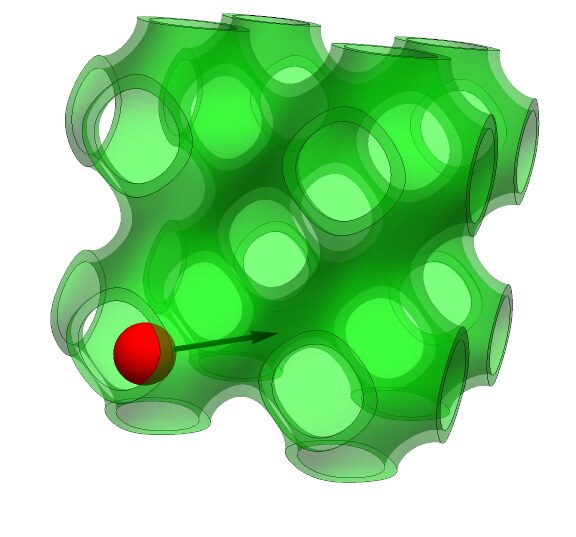
Diffusion Coefficient in Water Channels
Mechanically-accurate DNA (MADna)
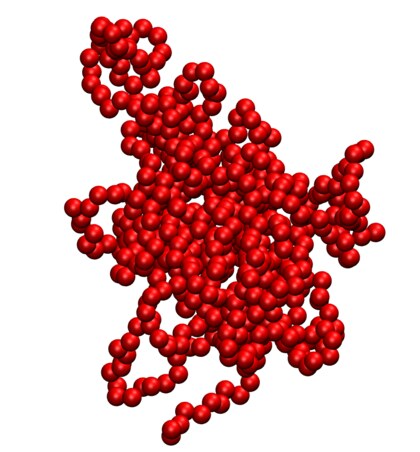
IDP potential from this article
Open Positions
We always welcome inquiries from prospective PhD students or postdocs interested in joining us to pursue nice research projects. Get in touch to discuss possible funding opportunities offered by national and international programs.
Current Members

Click on the pictures for further info
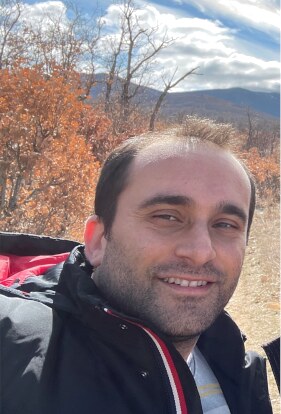
Salvatore Assenza
Principal Investigator
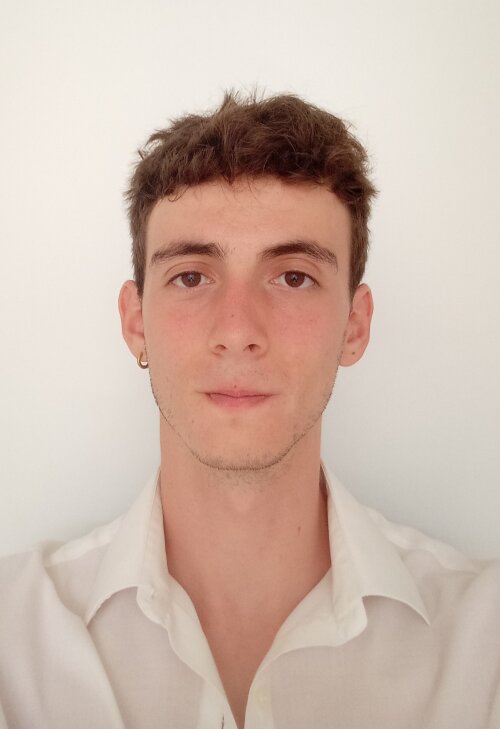
Jorge García Inglés
PhD Student
(co-advised with L. Zotti)

Yago Casado Molinero
PhD Student
(co-advised with R. Pérez)
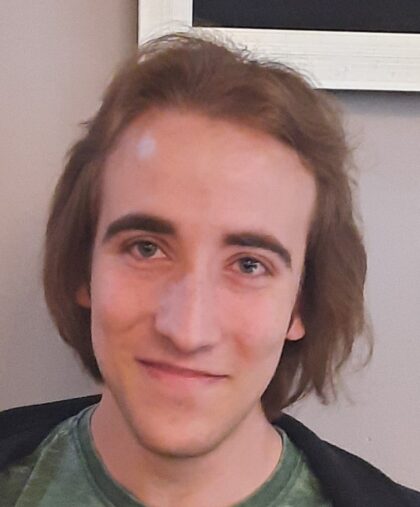
Alberto López Rodríguez
Graduate Researcher
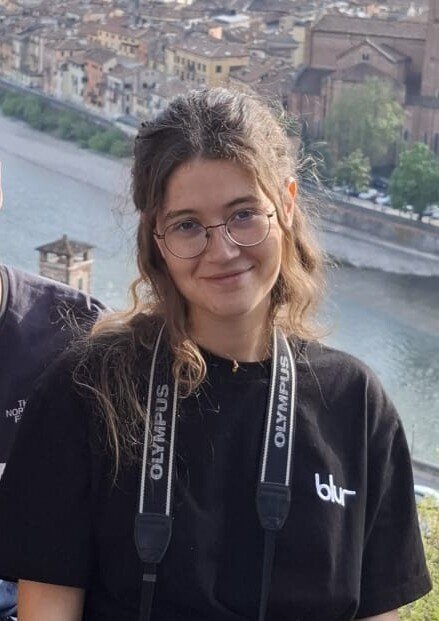
Lucía Martín Fernández
MSc Student
Alumni
• Antonio Estacio Mateos, MSc (2025-2026)
• Álvaro Bueso Higueras, MSc (2025-2026)
• Chiara Tramarin, MSc (2025-2026)
• Juan Luengo Márquez, PhD (2021-2025)
• Eva Zunzunegui Bru, PhD (2021-2025)
• Miriam Moreno Sierra, BSc (2024-2025)
• Nerea Alcázar Cano, Postdoc (2022-2023)
• Sebastián Jiménez Millán, MSc (2022-2023)
• Diego José Craviotto Villegas, BSc (2022-2023)
• Carlos Díaz Alcón, BSc (2022-2023)
• Julia Rubio Loscertales, BSc (2020-2021) and MSc (2021-2022)
• Antonio Miguel Bosch Fernández, MSc (2021-2022)
• Diego Alcón Vela, MSc (2021-2022)
• Juan Zalvide Pombo, BSc (2020-2021)
• Aarnau Martorell, MSc (2020-2021)
• Rodrigo Rosado del Castillo, BSc (2019-2020)
• Paride Azzari, MSc (2017-2018)
• Luca Antognini, MSc (2016-2017)
• Alberto Sassi, MSc (2014-2015)
Teaching Notes
These notes are licensed under a
Creative Commons Attribution-NonCommercial 3.0 Unported License
Thermodynamics
Statistical Mechanics
Simple applications of Statistical Mechanics
Van der Waals forces
Electrostatics in liquids
DLVO
Polymer Physics
Molecular transport
Law of mass action
Present and Past Collaborators

Fernando Moreno Herrero
Centro Nacional de Biotecnología - CSIC (Spain)

Laura R. Arriaga
IFIMAC & Universidad Autónoma de Madrid (Spain)

Juan Aragonés
IFIMAC & Universidad Autónoma de Madrid (Spain)

Alessandro Barducci
Centre de Biochimie Structurale de Montpellier (France)

Pierre Goloubinoff
University of Lausanne (Switzerland)
Livia Salvati Manni
The University of Sydney (Australia)

Wye-Khay Fong
Monash University (Australia)

Raffaele Mezzenga
ETH Zürich (Switzerland)

Paolo De Los Rios
EPFL (Switzerland)

Rubén Pérez
IFIMAC & Universidad Autónoma de Madrid (Spain)

Jesús Gómez Gardeñes
Universidad de Zaragoza (Spain)